


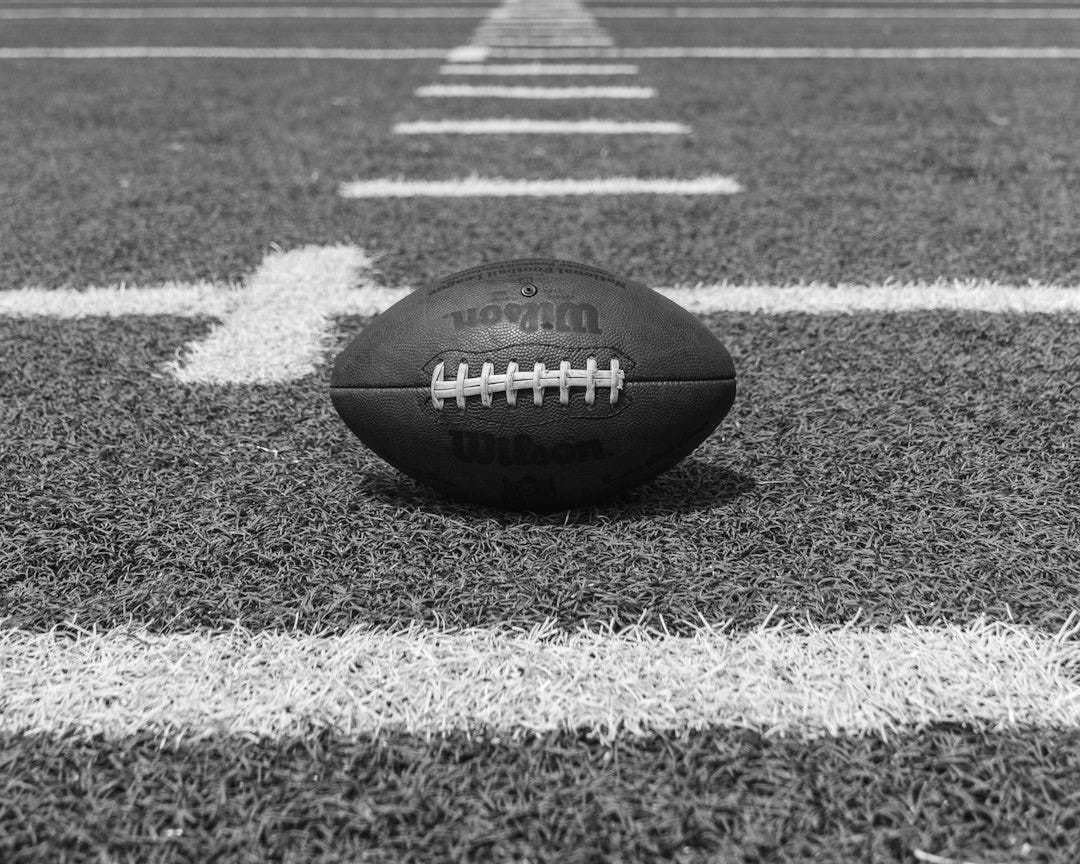
I was captain of my college hockey team. I made all-conference. Twice. Not long after graduated, I was hired to coach at my alma mater.
Then for 20 years I didn’t follow the sport.
I edited a baseball magazine sold outside the Metrodome before Minnesota Twins games. I built a baseball library. I started a baseball book club. I wrote an award-winning baseball book.
Then I stopped watching baseball.
Since the Twins opened Target Field in 2011 I have been to exactly one game — a rain-shortened affair, as it happens, so I haven’t taken in even nine innings in more than fifteen years.
When the 15-1 Minnesota Vikings were upset in the 1998 NFC Championship game, I reacted as though there had been a death in the family.
By the time wunderkind Randy Moss — a man largely responsible for the record-setting season that ended in that soul-crushing defeat — departed the team half a dozen years later, I had exited as a fan of football.
Why, in my relationship to sports, do I oscillate between such poles — between quintessential true believer and wholly disinterested bystander?
I write that sentence in the present tense because this isn’t a case of simply outgrowing sports. Or of life getting too busy for ballgames. While, of course, one’s fandom changes from the white-hot intensity of childhood, the on-again, off-again dynamic has played out over the balance of my adult life.
In many ways, sports are my first language. Reading about sports was my initiation into reading itself. I used to race my older brother to the stoop to nab the newspaper in the morning so that I could consume the sports section — cover to cover, features and game reports, columnists, and every last line of agate type — each day. In my elementary school library I checked out all the sports books. In college, I could be found holed up late at night reading — reading Deford or Rick Reilly, that is, rather than Dante of Robert Burns.
As a kid, I watched all the sports on television — baseball, hockey, football, basketball, tennis, bowling — if they played in front of a camera and kept score, I was in the target audience. That is, if I wasn’t outside playing sports myself. Growing up in Minnesota, hockey was primary. Baseball was big, too. Backyard football and driveway basketball were also part of the personal Olympics that unfolded not every four years but nearly every waking hour.
Inevitably, that sort of love fades. There’s no reason at all to wonder why I don’t collect trading cards anymore. Yet, here, into my sixth decade on this big bouncing ball we call earth, my romance is altogether different than can be explained by the acquisition of adult responsibilities or various forms of well-roundedness (many of which I don’t possess).
The moment in which I write these words is 10 hours before Josh Allen plays football. It’s Thanksgiving Day. I have a lot to be thankful for. I have a stable job. A roof over my head. A full fridge. Education and emotional support. Good health insurance. I will spend time this afternoon with family in a full house.
Yet for all that I could be thinking about today, one thing I keep thinking about is how excited-nervous I am for the game tonight.
When it comes to football, I root for Josh Allen, the Minnesota Vikings, and against the Kansas City Football Team.1 That this game might well decide the No. 1 seed in the American Football Conference playoffs this season — Buffalo comes into the game with just one loss this season, Kansas City with only two — heightens the tension.
That the weather in Buffalo is expected to be rainy and cold only heightens the variables of what could happen.
There are so many things I could be thinking about today. There are so many things I could be writing about today. But Josh Allen is what I’m thinking about and Josh Allen is what I’m writing about.
Why?
I don’t have a prepackaged answer. I have never been to Buffalo. I don’t know Allen personally, of course. He’s the most exciting player in the sport both because he can do things no one else can do and also because does things that no one should. He’s a quarterback equally likely to run over a linebacker as he is to throw the ball with his left hand to that same linebacker.2 He’s the athletic equivalent of a slow-moving car crash. He makes you nervous to watch but you also can’t avert your eyes, either.
You can never know about the private lives of public people but Allen seems like a good guy. When his teammates talk about him, they talk about wanting to win not with him but for him. After he scores a touchdown, he gives the ball to one of the lineman that blocked for him so that guy can spike it and celebrate. Buffalo is a big small town with crummy weather and Allen is perfect representative of the city — underrated, beaten over and over, but still smiling, still hopeful. I want to see this good guy win the big one.
A few other responses to the question:
First, why do I have to have an answer? We’re drawn to what we’re drawn to. In last year’s playoffs, Josh Allen put his team on his back in a wild-card weekend win over the Jacksonville Jaguars. I recall at one point literally levitating from my feet on account of one of his feats. I didn’t decide to do that.
Given that answer, why am I even asking Why? For all the time I have spent in my life on sports, part of me sees the watching of ballgames as frivolous. Life is finite. Does it make sense to spend my allotment of hours in this body watching a person I don’t personally know play a game? Why would I allow how well that person plays in that game affect my mood one iota? There are many smart people who don’t know what a quarterback sneak is. Shouldn’t I be reading Faulker or something? Volunteering at a shelter? Going to bed on time — at least?
I’m going to resist putting up a defense here or making an argument. I know, based on my personal history, a year from now I might not watch football. Or, conversely, maybe I’ll write a manifesto about the joys of Josh Allen’s capacity to sling a pigskin. Since I can’t tell you how long this fascination will last I’m certainly not going to try to convince you to share in it.
Still, it’s worth considering why we do what we do — why we’re preoccupied by one thing or another.
My working sense is that our souls have been dropped into a time and place. We’re all here to connect. We’re not all here to connect in the same way. But we’re all here to connect. The paradigm of this place and time is stuff. That is, the material world. Of course, ideas can be delightful ways to connect. Emotions, too, obviously. But in order to connect in any way we have to have some tangible manifestation of those ideas, emotions, etc. We have physical bodies for a reason. They are the vessels for our connection. And, of course, they are always touching something else (molecules and the like) whether or not we’re aware that they are. Sports are highly physical and they happen to be what I loved when I was a boy.
There isn’t a right way to connect — or a wrong way to connect. This doesn’t mean all forms of connection are equivalent. Or good. We can attach ourselves to harmful things, destructive things, unproductive things. It’s worth examining, lest we find we’re wasting time on things that don’t feed our souls.
But we also can’t will ourselves to like what we don’t or be what we’re not. Tonight, after I return from Thanksgiving with family, I won’t be reading Chaucer or packing my bags to go save the wales. I’ll be in my living room waiting to see what Josh Allen does next.
Why is this the right choice? I’m not going to say that it is; that feels too defensive and, again, my career as a football fan might not last as long as Josh Allen’s career as a football player. Yet the best answer I have at the ready is that watching Josh Allen play football tonight is the thing that that, at that moment, is most likely to make me feel alive. Connected to something. Something living and live. Unscripted. Something other people also will watch and care about and talk about. The game will move me in that moment to recall memories of my past; it will call on my mind in the present; it will affect my spirit about the future. Also, it will stir my emotions, for better or worse. During one game of Allen’s I watched last season the broadcaster quoted him of saying about pain that “I’m happy when I feel pain because it lets me know I’m alive.” Yes.
After the game, depending on whether the outcome is favorable or not, I may be in a state of bliss and listen to people talk about what we just watched. Or I might go in my room and try to take my mind off the outcome altogether.
Given the available options for possible connection, this will be the one I’m drawn to.
Pleasure is a complicated thing for me. Sports are, in that way, a simple antidote.
I don’t write the latter’s nickname because I can’t believe in 2026 that we still see 76,000 people stand in unison and do mock tomahawk chops and the faux warwhoops of indigenous peoples. Patrick Mahomes, Kansas City’s counterpart at quarterback, is obviously a great player. He makes good commercials and I want him to lose every time he steps onto the field.
Allen is right-handed.