


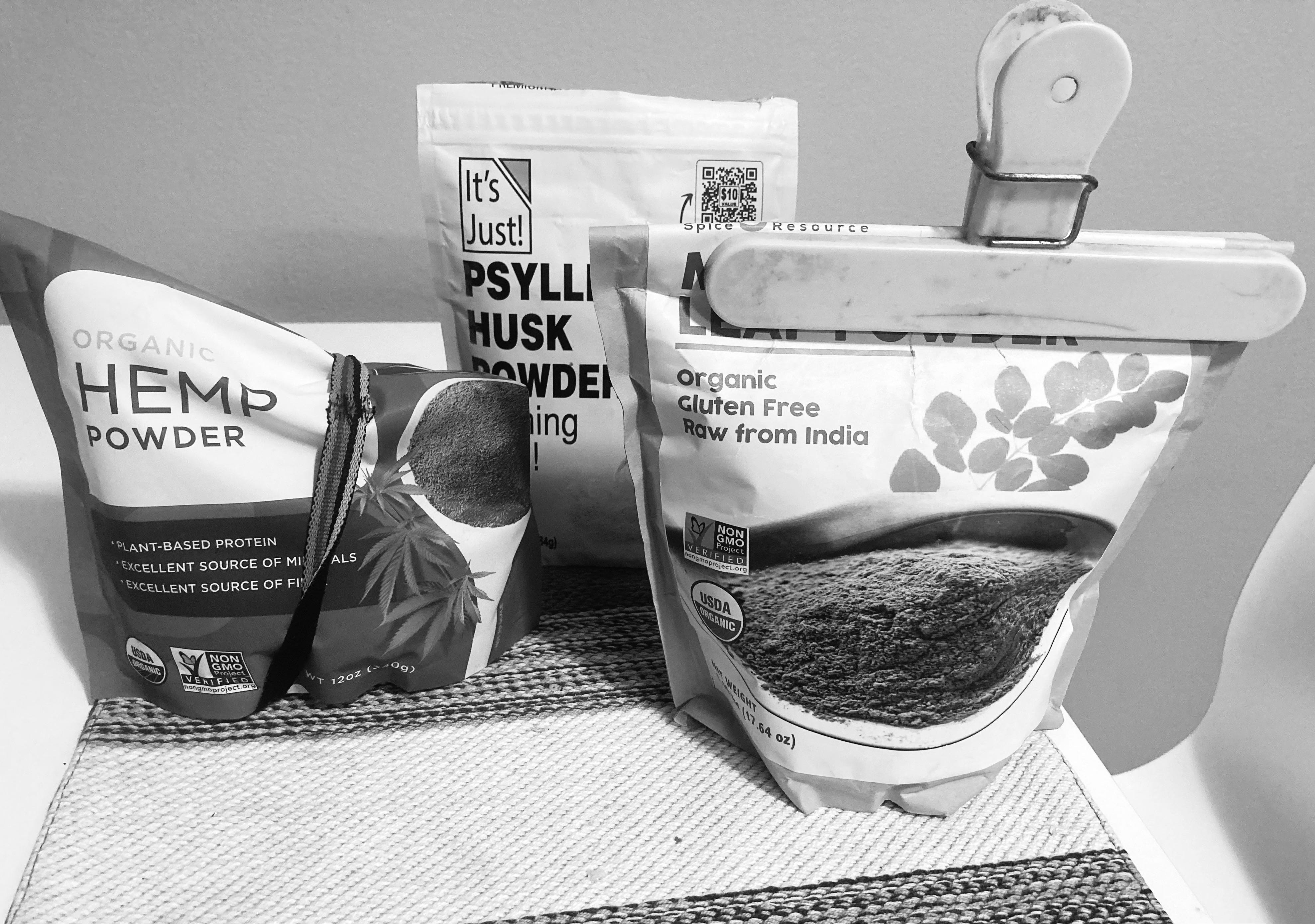
Nearly every foodstuff I buy these days comes in a resealable package. Almost none of these resealable packages work. Or, if they do work, the reseals have a far shorter expiration date than do the edibles they are intended to contain.
What in the name of holy bologna is going on here?
It was more than 70 years ago that Danish inventor Borge Madsen messed around and came up with an idea that would later save all of us many messes. Madsen didn’t know why he made the first little plastic baggy thingy. There was no intended use. There wasn’t even an apparent use. That is, until a fellow named Steve Ausnit learned about Madsen’s invention and thought, hey, maybe there could be a use.
Eventually, after about a decade of tinkering, Ausnit came up with an add to the then open-ended plastic baggy thingy. He said, “Hey, let’s close that sucker!1
Hence, Ausnit invented what we all know as the Ziploc bag.2
When Ziploc bags first made their way into supermarkets — this was in 1968 — no one knew what to do with them. Five years later, no one knew what they would do without them. As Vogue told its readers in November 1973, there is “no end of uses for those great Ziploc bags.”
In the ensuing decades, we have stored our lipstick, our Band-Aids, our apple slices, and our salami sandwiches in the airtight seal of the zipper-like mechanism that makes the Ziploc the Ziploc.
This technology, if not the brand name, has been adopted by bag men (and women!) in way more industries than an English major could count.
As a single guy with no offspring, I don’t buy an inordinate number of processed foods. But it’s nearly impossible not to come in contact, nearly daily, with a zipped bag, circa 2026, if you are, in fact, an eater.
Coffee.
Protein.
Fiber.
Supplements.
Don’t get me started on dog treats.
I mean even the bird seed.
These days nearly any granular, powdered, preserved, or flaked food that sits on a shelf — and many that require refrigeration — has a resealable top.
I say resealable top but after the initial package opening that is really more of a theory.
At some point, the trajectory of human technological advancement of the resealable package hit a plateau. Regressed even. We have, in fact, fallen from the height of human sealable packaging ingenuity and currently live in a world in which many bags of goodies come packaged with the promise of resealability3 but, really, should include a legal disclaimer that says, in essence, “Don’t count on that, buddy.”
I mean what are we telling the kids — that it’s OK to lie?
Sometimes the press-and-slide re-seal will hold for a spell and then, poof, it’s gone faster than you can say “stale Doritos.” Whether immediately or some days into the shelf life, nearly always these bags fail to work at some point. That is to say, the seal doesn’t last nearly as long as does the product you bought the bag to consume. By definition, the contents of these foodstuffs are such that they are best not left in open air. Yet across product types and brands, I have tried many zip styles, some of them more than once, and the result is the same.
Fail.
Fail.
Works for a few days … fail.
So ubiquitous is the failure of the modern incarnation of the mock Ziploc I am left to wonder whether the people who manufacture the bags are in cahoots with the makers of the Chip Clip. Let’s face it, the heyday of the bag tong is over. If you can reseal a bag, you don’t need a clip. Ergo, I can’t reseal my bags. So someone’s got a scam going on here.
If that’s not it, then maybe this is four-dimensional chess involving the makers of GLP-1s.
Honey, we can’t store this food. Whatever are we going to do?
The only thing we can do, darling.
You mean eat all of this right now?
We can’t let it go to waste!
Our failure must be explained by a conspiracy of some sort — it would be far-fetched if it weren’t! — and you have to wonder why no other writers are willing to take up this topic. Have others been silenced? Paid off by the bag men (and women!)?
Otherwise, we’d need to take a long look in the mirror at our foodstuff stuffed faces and consider that maybe, as a people, this is the best we can do and, well — excuse me for a moment — er, someone is at my door — um, I’m afraid I’ve got to go.
It appears I’ve said too much already.
These might not have been his exact words.
According to The New York Times (paywall).
A word I just made up.