


I didn’t even intend to watch a movie. Outside of hockey season and fall Sundays (football), I seldom turn on my television. But here … on a school night no less … I was thinking … actually, I’m not sure what I was thinking … the muscles of discipline being flabbiest in the later hours … when I turned on the TV … when into the streaming feed appeared a flick that, until then, was unfamiliar to me: Whiplash.1
I do recall thinking that I would start this movie about a musician and his teacher and watch only a few minutes. You can tell a lot about the seriousness of a production from its opening scene. If hooked, this fish could finish the movie the next day. If not, I would be off to catch some Zs.
A third alternative was presented and tacitly assented to when it turned out that I couldn’t stop watching this movie.
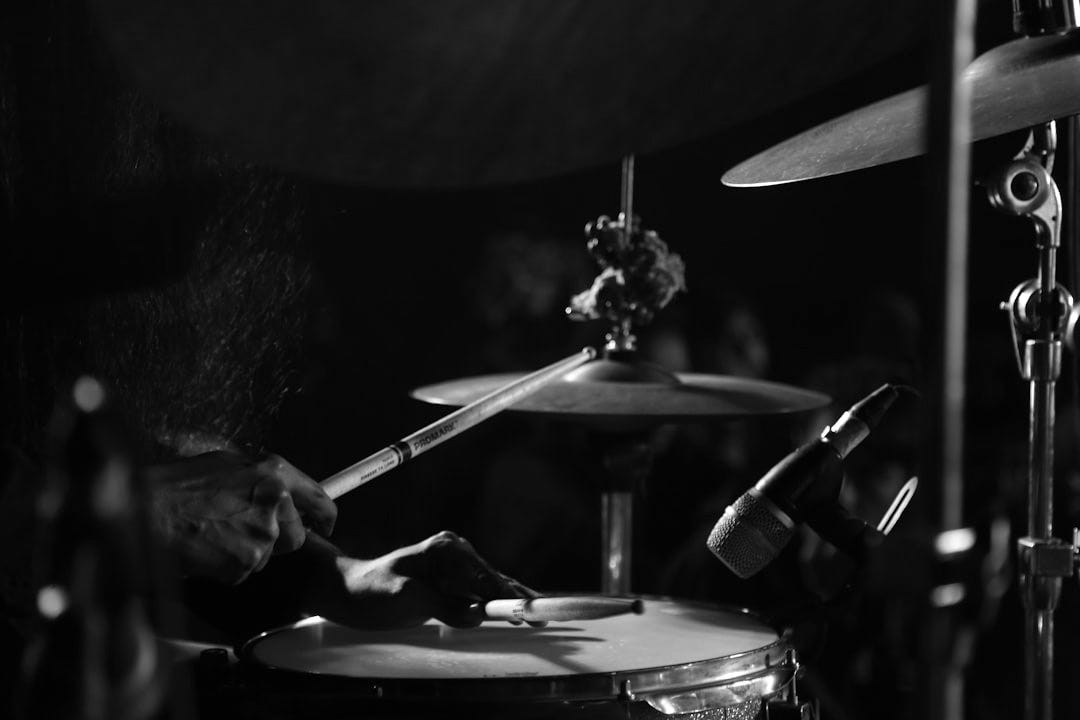
Whiplash begins with a drum solo by Miles Teller, who plays protagonist Andrew, a first-year college music student. In what appears to be an empty dorm after hours, Andrew is all alone, practicing, when J.K. Simmons, in the role of Terence Fletcher, the Bobby Knight of college jazz band instructors (yes, in fact, at one point he does throw a chair), enters his life and, like a tornado, whips him about in ways Andrew can’t control. The film follows from that moment as this duo make far more than toe-tapping tunes. It was not long after that initial scene — during which Fletcher performs the first in a series of psychological whiplashes, seemingly interested and then suddenly not — that I realized there was no chance I would soon fall asleep.
To clarify, this isn’t intended as a movie review. If you want one of those, they aren’t hard to find — including those from film critics with more chops than me. Why I’m writing about Whiplash days after watching it — after watching it the first time, I mean; I have since rewatched it (I call these “Fleeting Obsessions” for a reason, people) — is to tease out the reason I was so moved by this movie. Many films, even many good ones, don’t strike like this one did. And so I want to stay close to it. I want to sit with the Why.
What is clear is that Whiplash is a story about excellence. It’s not about merely good work or even great work. For sure, it’s not about fame. Or wealth. And, certainly, it’s not about “likes” or “followers” — those peculiar measurements of status and approval we seek, circa 2026, as proxy validation. The story is about the singularity of purpose a small percentage of people have to become the very best at something.
Of course, many of us would like to be the best at something. I mean, that sounds fantastic! Yet few of us burn with the desire sufficient to sacrifice enough to so much as have a chance to become the best at something.
Andrew doesn’t want to be a good jazz drummer; he wants to be one of the greats. He obsessively listens to the music of the late Buddy Rich, so accomplished that those in the know during his day referred to him as “the world’s greatest drummer.” Andrew’s known from a young age that percussion is his calling. He’s socially awkward, seldom dates, has few friends, and struggles to relate during family dinners. He has a good, if not especially warm, relationship with his father (played by Paul Reiser),2 who supports his son, whom he raised solo, despite their not sharing a sensibility for much beyond movies and popcorn. The father, frankly, doesn’t understand the intensity of his son’s desire.
Andrew attends the Shaffer Conservatory in New York City, a fictional institution based loosely on real-world, highly competitive music programs. He attends Shaffer because — as he tells a girl he takes to a hole-in-the-wall pizza place expressly because on the restaurant sound system they play old jazz albums — it’s “the best music school in the country.” Which means, de facto, he went to Shaffer because he wants to one day warrant a chair in Fletcher’s band, the school’s premier ensemble. Despite the impression he left the young drummer with during their initial meeting, Fletcher does notice Andrew’s promise. He later gives him a chance to make the band, builds him up a bit, and then proceeds to push him beyond all common limits. This isn’t just a case of hard-to-play pieces or a taxing practice schedule. Fletcher berates and belittles Andrew. He calls him names. At one point he gets physically abusive. The flying chair … that chair sailed at Andrew’s head — and the trajectory wasn’t the result of greasy fingers.
The instructor plays head games, such as giving less capable drummers Andrew’s chair, and some tactics are downright demeaning (Andrew is forced to play faster and faster until his hands are reduced to a bloody mess). Fletcher stands before his band with his feet planted outside the boundary of acceptable behavior in mainstream America. And this isn’t a period piece. Whiplash is set around the time of its theatrical release in 2014. Fletcher wouldn’t last 10 minutes in a mainstream school, circa 2026, but at Shaffer he’s got the sort of stature that he can interrupt other instructors’ classrooms unannounced to conduct impromptu rehearsals for his band.
“There are no two words in the English language more harmful than ‘good job.’”
—Terence Fletcher (played by J.K. Simmons)
I’ve had a number of dreams in recent times about coaches. Sometimes these are coaches I once had. More often they are famous coaches I will never meet. My all-time favorite movie (Hoosiers, 1986) is the story of a coach. I like that word: coach. And I especially appreciate the role coaches play. Coaching is a bold expression of self; you come honest or your charges don’t develop. In a best-case scenario, your student no longer needs you and all the glory goes their way. Bizarre but true, sometimes the biggest storyline in a high-profile game is about the guy or gal behind the bench / on the sideline — a person who never steps foot on the field of play. What is the coach going to do next? Can he / she outwit their counterpart? Win despite a serious setback? Succeed despite a less skilled roster? A good coach’s work compels even though, unless you’re a player on the team, almost none of the elements of their work are visible.
In these high-sensitivity times, the authority of coaches, especially but not only at amateur levels, is often highly scrutinized. Parents especially step into the middle of coach-player relationships and not uncommonly take punitive action against those coaches with whom they don’t agree (and here I mean coaches whose approach isn’t in the same league as Fletcher’s when it comes to intensity or tactics). It hasn’t always been that way — it wasn’t that way when I was being coached on a daily basis on baseball fields and in hockey arenas — and part of what kept me watching Whiplash is that it’s still, decidedly, not that way at Shaffer.
I like to read books and profiles about coaches and around the time of my recent coach-themed dreams, one book about a ground-breaking coach3 cited a Michael Lewis profile of late eccentric coach Mike Leach,4 and while searching for that piece I stumbled onto another Lewis effort — “Coach Fitz’s Management Theory,” a 2004 essay in The New York Times Magazine — about the author’s high school baseball coach. After no contact with the coach, Billy Fitzgerald, for more than 20 years, Lewis receives two pieces of news more or less simultaneously that, taken together, don’t make sense.
The first: a letter from a fellow alum organizing a fund drive to renovate the old school gymnasium and name the re-opened facility after Coach Fitz, as everyone calls him, to honor the life lessons the coach instilled in his players that years later they all still profit from. The second: news that parents of players on the current team, still coached by Fitzgerald, were moving to have the coach removed from his job. These parents don’t like the coach’s tactics and, funny, the players of those parents have ceased putting in much effort and the team isn’t thriving. The juxtaposition is telling; the same coach and two diametrically opposed views on that coach from different generations.
To be sure, Coach Fitz wasn’t a “nice” guy who handed out participation trophies. Lewis recalls moments from his varsity seasons when Fitz embarrassed him in front of the team. He remembers instances in which the coach drove his 16-, 17-, and 18-year-old players harder than most other coaches would. Fitzgerald wanted to win ballgames, of course, but more than that you get the sense from the profile that he wanted to instill a way of being, a way of valuing excellence. An encouraging pat on the butt doesn’t always get that done. (As it happens, Peyton Manning graduated from the very same high school. Lewis called Manning, at the time the highest-paid quarterback in the NFL, and the former No. 1 overall NFL draft pick took time out of his practice schedule to talk, at length and effusively, about what Fitzgerald, the baseball and basketball coach, had taught the budding football star.)5
Despite real-world examples like Manning or fictional ones like Andrew, there’s desire for coaches in current times to be more akin to cheerleaders with clipboards. How much this actually hinders, rather than helps, the development of their students / players / employees is an open question. What isn’t a hot take is the notion that young people — and, really, all people — often need more than praise in order to grow and develop. Whiplashes might be extreme but there is, or at least should be, a fear on the other side of spectrum, too: The path to excellence is seldom easy.
Incidentally, “Whiplash” isn’t just the name of the movie; it’s a jazz chart written by Hank Levy, a big-band composer, in the 1960s, a standby that Fletcher’s band performs. So the title counts, we might say, double-time when it comes to meaning. Fletcher’s pedagogy could be rightly summed up as that: whiplash. He’s not volatile because he’s an out-of-control perfectionist. He intentionally engineers unpredictability. He wants the sensitive student who seeks approval to strive as high as he or she can to receive it.6 The downside is that many don’t. More than a few young musicians leave Fletcher’s band in tears.
The last third of this 106-minute film, during which the story deftly pivots from a corner it had been written into, is the movie-equivalent of great jazz. That is, Andrew and Fletcher create atmosphere you want to soak in. This begins with one of the film’s best scenes — a moment in which Andrew and Fletcher meet for the first time since a falling out that caused Fletcher’s dismissal from the school. They don’t just run into each other; Andrew wanders into a New York jazz club after seeing Fletcher’s name on the club roster. He was drawn to his coach when he selected his school and he’s still drawn to his coach even after all the abuse he’s taken. I think people innately know when something is calling them to a higher place.
You can hear glasses tink and someone must be on the sax as teacher and pupil commiserate …
Fletcher: I don’t think people understood what it was I was doing at Shaffer. I wasn’t there to conduct. Any fucking moron can wave his arms and keep people in tempo. I was there to push people beyond what’s expected of them. I believe that is … an absolute necessity. Otherwise, we’re depriving the world of the next Louis Armstrong. The next Charlie Parker. I told you that story about how Charlie Parker became Charlie Parker, right?
Andrew: Jo Jones threw a cymbal at his head.
Fletcher: Exactly. Parker’s a young kid, pretty good on the sax. Gets up to play at a cutting session, and he fucks it up. And Jones nearly decapitates him for it. And he’s laughed off-stage. Cries himself to sleep that night. But the next morning, what does he do? He practices. And he practices and he practices with one goal in mind, never to be laughed at again. And a year later, he goes back to the Reno and he steps up on that stage, and plays the best motherfucking solo the world has ever heard. So imagine if Jones had just said, “Well, that’s OK, Charlie. That was all right. Good job.” And then Charlie thinks to himself, “Well, shit, I did do a pretty good job.” End of story. No Bird. That, to me, is an absolute tragedy. But that’s just what the world wants now.
If you can’t take what Fletcher is giving, or so it follows, you don’t care enough to become excellent. And, hey, there’s no crime in that. Most people don’t care enough. Most people consciously choose “balance” (whatever that means exactly) over the extreme required for truly excellent work. They want a job and relationships and hobbies and vacations that are rewarding and manageable. Music, sports, theater, and the like — these “extracurricular” activities make for well-rounded human beings and, to be sure, the world needs more of those.
As many of us want variety and simple (not necessarily deep) pleasure from our days, the idea of practicing the drums (or writing or woodcarving or whatever) until your hands bleed is considered a form of torture — not something you voluntarily do. (In this respect, Andrew’s father is an understated but important figure in the story; he eventually encourages his son to separate from Fletcher but, more or less, he otherwise watches from the remove of back-stage. There is under-protection, there is protection, and there is overprotection; Andrew’s father sits in the middle ground — he’s not a helicopter parent.) But if you do want to be excellent — if you want to be a pre-eminent musician that people listen to and talk about decades after your death — you need someone to push you harder than you can possibly push yourself. Or so the film suggests.
The path of praise doesn’t lead you to become the next Charlie Parker. As Fletcher says to Andrew: “There are no two words in the English language more harmful than ‘good job.’”
Of course, who doesn’t like to receive approval? Who doesn’t want to hear that they’ve done well? Yet Fletcher isn’t wrong; everyone needs something to push against, something to strive for that is hard to entirely internally summon.7
What do you do after someone hurls a chair at your head? Report the hurler to the dean? Take your sticks and find another teacher? Quit music altogether? The answer the movie gives is that you get up the next morning and practice. You try harder. You practice until the skin on your hand falls off, if that’s what it takes. You practice and practice and practice until you’re so good that excellence — and the durable, unflinching self-respect that comes from earned excellence — is as much a part of you as the nose on your face.
In this way of thinking, excellence isn’t something anyone can bestow. It’s one of those things you have, you find, or you develop. Or you never do possess it. Again, this might be a conscious choice. Yet it seems the striving itself pays dividends, not just the result. For certain Andrew is, by the end of the movie, transformed and he’s still young; we don’t know whether people will ever refer to him as “the world’s greatest drummer.” Sans the striving, we are forever subject to the fleeting praise of others. In today’s parlance, we post again about how we’re living our best life so as to get the dopamine spike of likes. (Or the workplace equivalent. Or the relationship equivalent.)
There’s a related essay idea here that I started playing around with a couple of years ago after I read Babbitt, the brilliant Sinclair Lewis novel, but never worked all the way out. The title character is a man who drives down the middle of every road: he’s middle class, he’s middle age, and he lives in middle America. He’s not at the top; he’s not at the bottom. He’s a proud citizen of Zenith, a city perpetually on the rise. He has three kids he gets along with, more or less, even if he doesn’t much understand them. He has a wife who is swell, if not terribly interesting or terribly attractive. The family attends and hosts the dinner parties necessary to maintain a social status among the “good people” in town, never mind that these occasions more often than not are a bore. Babbitt runs a real estate office. He holds strongly moderate political views (if there is such a thing). He believes in being moral in one’s personal affairs (until there’s reason not to be), ethical in one’s business dealings (except when precedent offers a pass), and that Prohibition is a good idea (for other people). George Babbitt supports the church (even if he doesn’t much go there) and, as a proud member of the local Athletic Club, he scoffs at the more exclusive and expensive country club in town (mostly because they haven’t yet invited him to join). Meanwhile, Babbitt had dreams. He wanted to go to law school. He wanted to become a lawyer. He wanted someday to run for political office. Heck, given his gift for gab, he coulda been a contenda for governor. He never does any of these things — he never really strives for what he truly wants in life — because he receives praise directly and indirectly such that he’s never uncomfortable enough to be forced to really grow.
I get understand the fear about the Fletchers of this world. I wonder if we realize the fear of the Babbitts.
The thing is, if you can withstand the heat, something from within might come forth that you didn’t know you had. In picking up the pieces after you have been shattered you don’t come back the same. You become something new. You become a stronger version of yourself. A version less fearful. More secure. You know what it’s like to have your greatest hope crushed. There’s a freedom, a boldness, in knowing things can’t ever get worse than what you’ve already overcome.
To pause with the movie’s argument, we might consider that it is, after all, a feature film — not a self-help video. It’s fair to ask: Does one need to receive abuse to become excellent? Of course, not. That would be a preposterous assertion. There are excellent musicians, excellent artists, excellent athletes, excellent doctors and lawyers and teachers, the list of examples is long — who weren’t taught by Fletcher or a facsimile. One of my favorite artists is Jerry Seinfeld. I’ve heard him interviewed many times and I’ve seen his standup act live a handful of times. In his formative years as a comedian he flopped his share while working in nondescript clubs but, as comes from a supportive and stable family and was never abused, you wouldn’t say that his life was ever hardscrabble. Maybe Charlie Parker becomes Bird even if a cymbal never flies towards his face. Maybe Andrew lives out his potential even if taught by a teacher with less blunt-force tact. Who knows.
What we can say is that pain is a part of all lives and the presence of pain is a potential inflection point. In some people (we might say many people), pain channelled can accelerate the growth process like nothing else can; it can be a source of transformation in ways that praise cannot. For every excellent artist raised in a life of comfort and affluence there are many more who created their art expressly as a way to process their pain.8
I have watched the final scene of Whiplash six times and I get more out of the experience each time. The first time I was wondering where this goes. I was following the bouncing ball, so to speak. At some point during subsequent viewings it was no longer about what the narrative leads to; the experience of getting there is the payoff. Just like growth itself — right? It’s not as much about where you land but rather the effort you put forth that is the true reward. If we don’t have a coach that pushes us in that direction … we may never know what we could have been.
Some of our best coaches, I should add, might be persons who don’t hold that title and don’t know they are coaching us. In the end, Fletcher sets up Andrew to fail and fail spectacularly, and this last lash of the whip isn’t pedagogy. The instructor isn’t an instructor any more and, what’s more, he feels he’s been wronged. He wants retribution. Andrew succumbs; he falls apart on stage in front of witnesses with the power to end his career before it’s begun. He’s beaten. Except he puts himself back together. He crystalizes his experience. He becomes a new version of himself in the time it takes to play a spontaneous version of the jazz-band classic “Caravan.”
The newly constituted Andrew doesn’t just play this tune well. He doesn’t just play great. He creates new art. He makes something so brilliant that Fletcher cannot help but drop his dukes, for he sees an unfolding of an excellence he always hoped to witness in a student. In that way, Andrew takes what he learned from his teacher and transcends him as he creates something wholly new. As he takes over the band, Andrew mouths “fuck you” to Fletcher and the same time plays a solo no one has ever heard before — his Bird moment — and in that way also delivers to his teacher a deep form of “I love you.” This isn’t dissonance. Both expressions are sincere. And both ring true.
In other words, from his greatest depth, Andrew takes the performance to a place higher than any of them could have expected to go.
I’m drawn to characters like Andrew and coaches like Fletcher because of the singularity of their desire. As a person who doesn’t spend time, not any more anyway, seeking to reach some level of renown — I’m not aspiring to be foremost at anything — the clarity of One Thing appeals. I do try hard, very hard (some would say too hard), to become the fullest version of me. But this is different. Comparing myself to earlier versions of myself … useful — yet not the equivalent to chasing the ghost of Buddy Rich with a crowded house ready to see me fail.
So: Why was I so compelled by Whiplash? I think the primary response to that question is that it’s because inherent in the singular striving toward excellence is a reminder any of us can use: We only have so much time. We can spend our days practicing things that are especially important to us or we can spend them on everything else — including things that don’t help us grow. The extreme proves the point: whether or not we can read a sheet of music — whether or not we burn to be the very best at anything — the striving towards excellence matters and the people who might push us the most might not make us feel good as they do.9
After all, the cymbal is a symbol and it’s coming for all of our heads. It’s up to us to decide its meaning — agony or gift.
That I hadn’t heard of this film says more about my disconnect from popular culture than it does about the film. When it was released a dozen years ago Whiplash received more than a little critical acclaim, ample audience raves, and, eventually the film earned three Oscars.
I’m no expert on Reiser filmography — in fact, I’ve never been much of a fan — but this is the best performance of his I’ve seen.
The Perfect Pass: American Genius and the Reinvention of Football by S.C. Gwynne (2017), a fantastic examination of innovator Hal Mumme.
“Coach Leach Goes Deep … Very Deep,” The New York Times Magazine (December 4, 2005).
I recall seeing a clip from one of Manning’s pre-NFL-draft interviews in which he tells his would-be coaches that he will be mad if they don’t coach him hard.
In the process the audience is also put through this effect; this film about music lessons at times has the pacing and atmosphere of a thriller.
I say this even as I imagine myself at Andrew’s age and think how unlikely it is I would have responded as he did — and whether I would feel as sympathetic about Fletcher as I am if I were on the receiving end of his “lessons.”
Bruce Springsteen, as portrayed in the movie Deliver Me From Nowhere (2025) and in his 2016 memoir, Born To Run, is an example that comes to mind.
In fact, they probably can’t do both.