


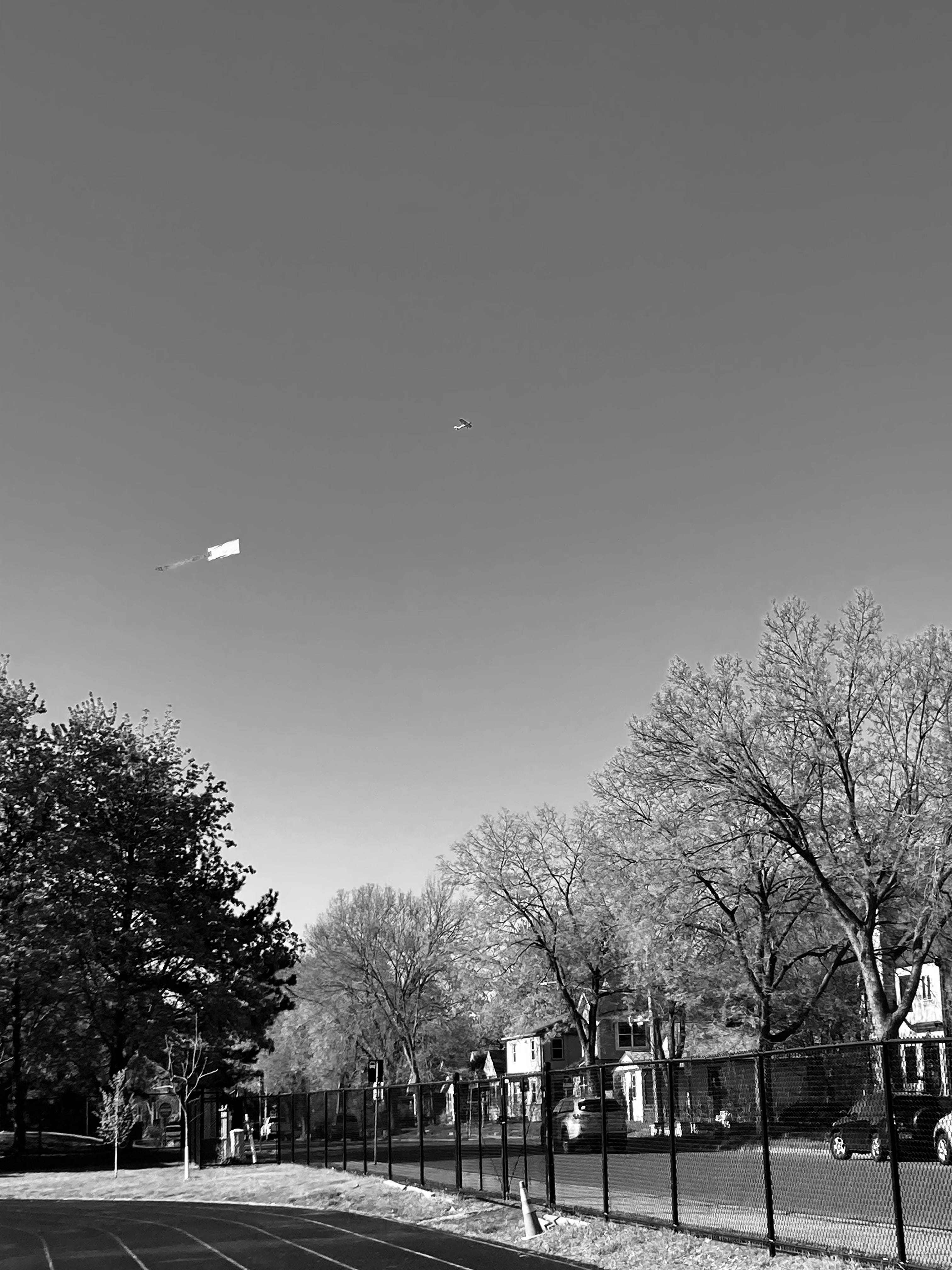
A quintessential twenty-first century American moment: On a beautiful spring morning in an area of the country, Minneapolis, where such days are few and therefore cherished, I’m walking around a middle-school running track with the aim to exercise, think, and otherwise enjoy an hour in the sun. A tow plane flies overhead. The banner doesn’t face me so I can’t easily read the specific name of the prescription medication mentioned in the aerial advertisement. But I can clearly make out the message I’m being given from on high: “Ask your doctor about it.”
It’s part of the ambience of life in the United States, circa 2026, that several times a day our eyeballs are presented with advertisements for drugs. It’s worth nothing that it didn’t used to be that way and that it still isn’t that way in all but one other industrialized nation (New Zealand). America used to effectively prohibit direct-to-consumer advertising of prescription drugs — and this wasn’t back in the days of bloodletting. Before 1997, the FDA required all prescription drug advertisements to disclose a summary that included all warnings, precautions, contraindications, and adverse events — requirements that effectively blocked most advertising, since you couldn’t fit all of that in a television or radio ad (and it would have made for an exceedingly long airplane banner). Direct-to-consumer campaigns initiated in the 1980s, for example, rare as they were, used print media only. Then, in 1997, the FDA relaxed its rules, which gave rise to the advertisements that dominate our feeds, fill our airwaves, and blemish our blue skies.
As I do my loops and the plane does its loops, I look to the heavens and wonder: Is there a drug that would immunize me against drug company advertisements? You know, I think I’ll ask my doctor about it. Because that would be right for me.